



07/08/2026
Blog
Accelerating drug discovery through scalable AI and HPC
By Dompé farmaceutici S.p.A
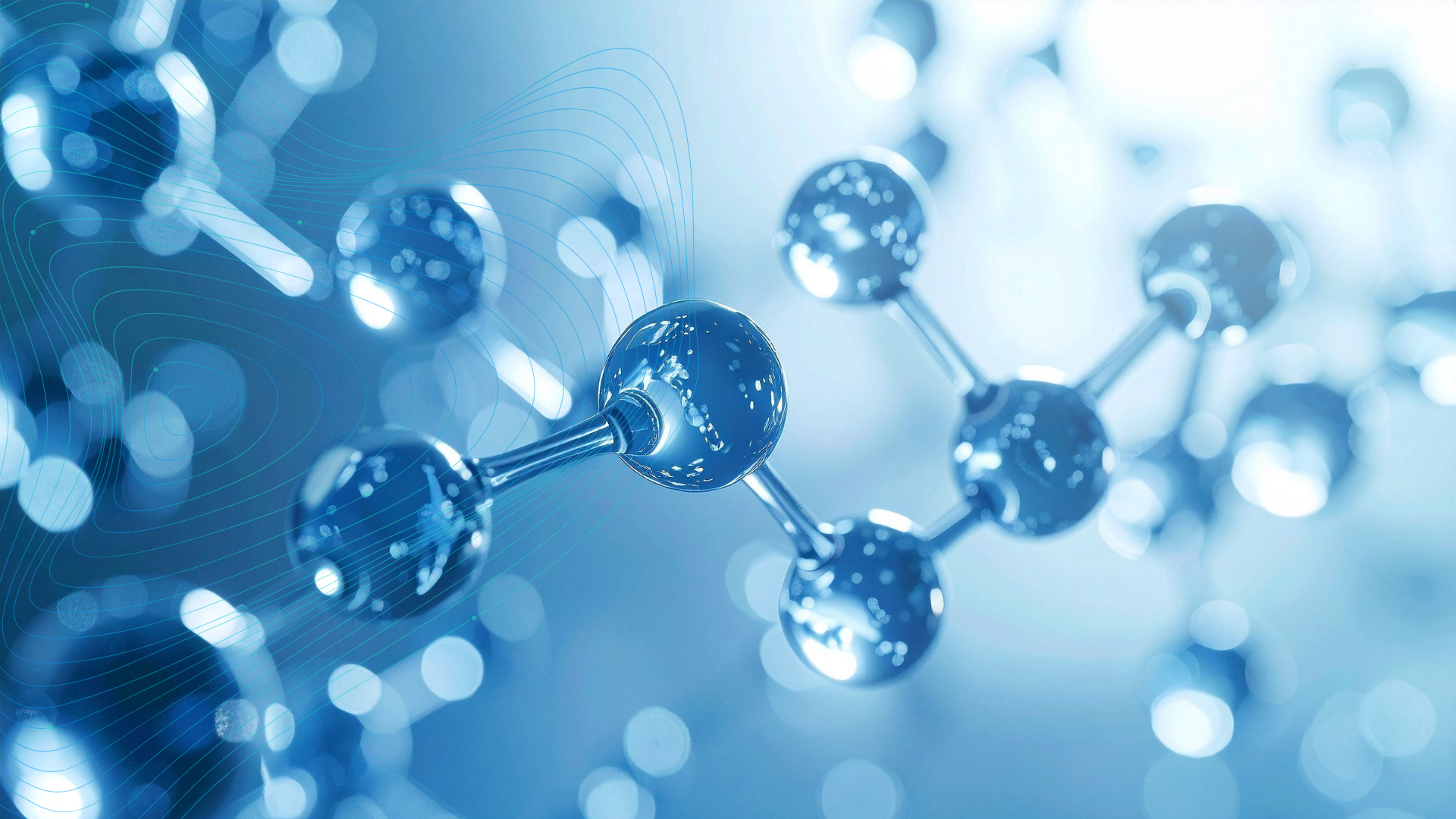
Accurately predicting how drug candidates interact with biological targets is a primary challenge in the drug discovery process. Improving this could significantly reduce development time and accelerate the delivery of new therapies to patients.
With the support of EPICURE and access to EuroHPC resources, the PRECISION project, developed by Dompé farmaceutici S.p.A., combines molecular dynamics simulations with machine learning (ML) to improve the accuracy and scalability of binding free energy (BFE) predictions. By transforming complex simulation data into scalable and reliable predictive models, the project enables faster and more efficient exploration of drug candidates.
Scientific and technical challenges
The project required processing large-scale molecular dynamics datasets and extracting meaningful interaction patterns for machine learning. Scaling these workflows to HPC environments introduced significant challenges, particularly in handling large data volumes and adapting pipelines not originally designed for parallel execution.
In addition, the extraction of meaningful interaction features for machine learning added another layer of complexity, requiring both domain expertise in molecular simulations and advanced programming capabilities.
Without addressing these challenges, the workflow would remain limited in scalability, thereby limiting its use in large-scale drug discovery.
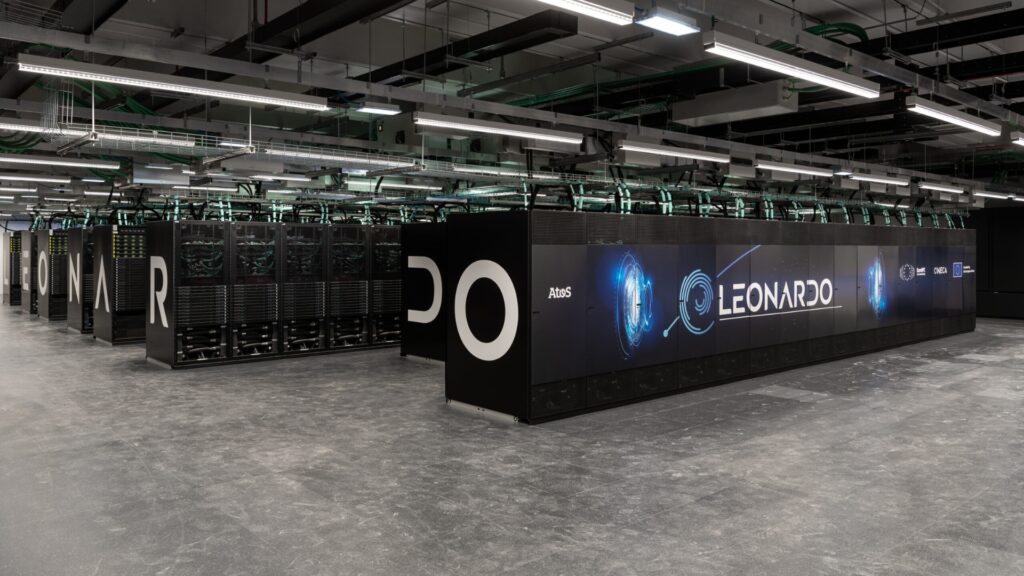
@Leonardo Pre-exascale Supercomputer
EPICURE support and EuroHPC resources
At the core of the project is BFEx (Binding Free Energy Exscalate), an internal software tool developed by Dompé farmaceutici S.p.A. to compute BFE from molecular dynamics simulations and extract interaction patterns for ML models.
Initially implemented as a serial workflow, BFEx was not suited for large-scale analysis. To overcome this limitation, Dompé farmaceutici S.p.A turned to EPICURE for support in redesigning and optimising the workflow for HPC environments.
The original workflow, built as a collection of Bash scripts, was redesigned into a modular Python codebase and enhanced with MPI-based parallelisation via mpi4py, enabling scalable execution across multiple nodes on the Leonardo supercomputer.
EPICURE also helped identify and resolve key performance bottlenecks, optimise communication patterns, and improve overall scalability. The team provided guidance on the configuration of reproducible scientific environments, performance optimisation, and ensuring compatibility with essential libraries such as AMBER, NumPy, Pandas, MDAnalysis, and PyTraj.
Overall, “EPICURE support was essential for transforming the BFEx workflow into a scalable, high-performance application capable of processing large datasets efficiently and reliably,” explained Akash Deep Biswas, Senior Scientist, Dompé farmaceutici S.p.A.
Results and impact
The optimised BFEx pipeline can now process thousands of protein–ligand complexes in a high-throughput mode, enabling large-scale extraction of interaction features for ML models.
Meanwhile, the transition to a parallel architecture improved performance, stability, and reproducibility. As a result, large-scale analyses became more reliable and binding affinity predictions more accurate.
From a broader perspective, PRECISION contributes to more efficient drug discovery processes. Improved prediction models can accelerate hit identification and lead optimisation.
By reducing the time and cost associated with early-stage drug discovery, the project has the potential to support the development of new therapeutic treatments and improve access to innovative healthcare solutions.

Next steps
Based on these results, Dompé farmaceutici S.p.A. will continue to expand the capabilities of PRECISION by scaling the BFEx workflow to even larger datasets and by integrating and refining machine learning models for predictive BFE calculations.
The next phase of the project will focus on GPU acceleration, additional HPC optimisations, and the extension of the methodology to other biomolecular systems, such as protein–RNA and protein–protein interactions. These developments aim to further strengthen the integration of HPC, molecular simulations and AI in next-generation drug discovery pipelines.
To learn more about the PRECISION project, visit the project page on the European HPC application support portal.