07/08/2026
Blog
From Paris to Tsukuba to Bologna: how EPICURE fine-tuned quantum Monte Carlo code for Leonardo
By Michele Casula (CNRS, IMPMC, Sorbonne Université)
During spring 2024, I was filling in an application to a EuroHPC Extreme Scale Access Call when I noticed the EPICURE support option, to optimise the code for the specific HPC machine. Getting help from the machine experts seemed a reasonable idea, so I ticked the box. It turned out this to be a very good decision for our project.
Why the code needed tuning
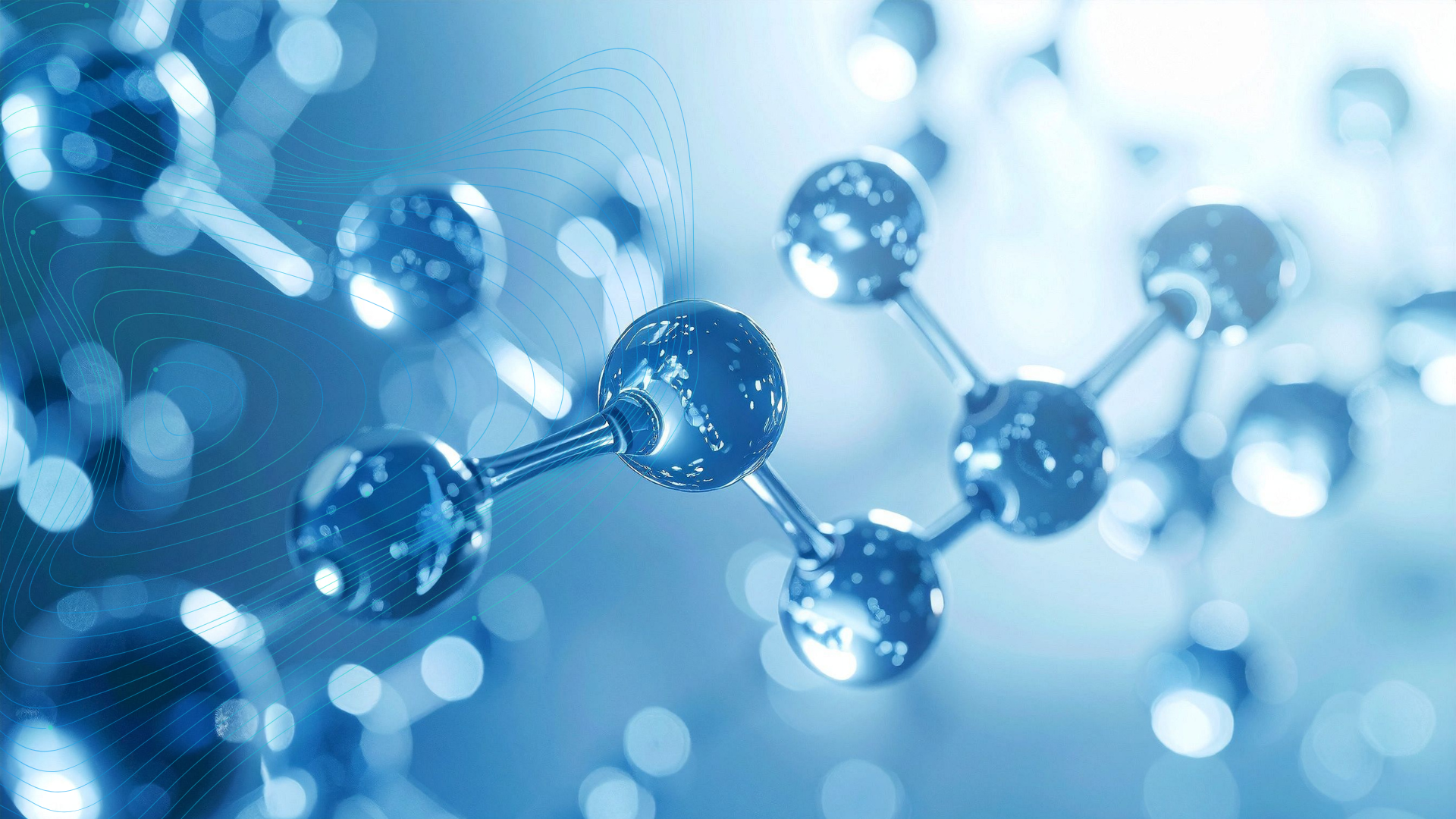
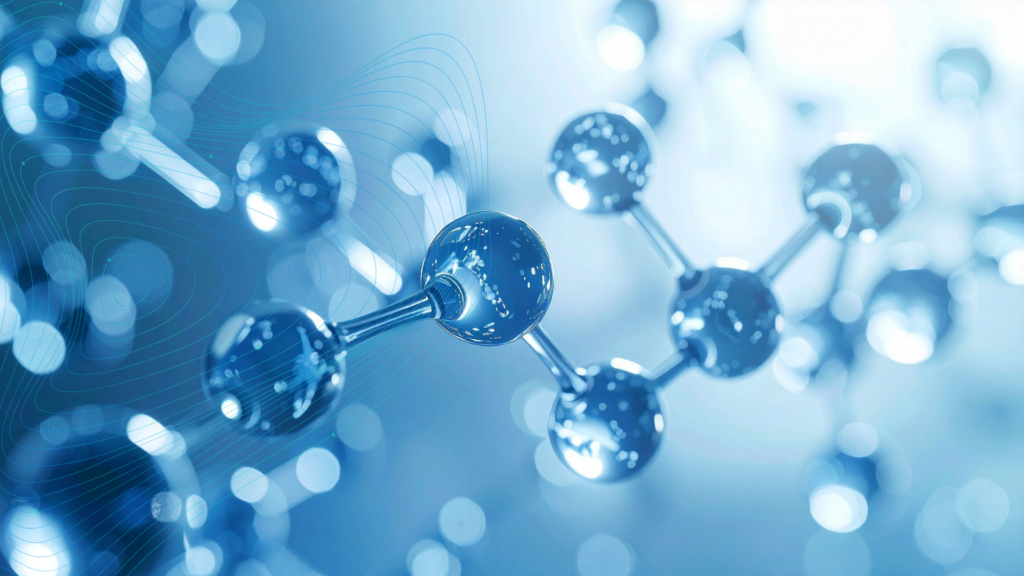
Hydrogen is the simplest element in the universe, yet predicting how it behaves as a liquid or a solid is extremely difficult. It matters: hydrogen compounds are studied for high-temperature superconductivity, and hydrogen itself is a candidate for energy storage. My group at IMPMC tackles the problem using quantum Monte Carlo (QMC), a method that is very accurate but numerically expensive and well-suited to HPC machines. Think of it as a Formula 1 engine: unbeatable on the right track, but only if it is tuned for that track.
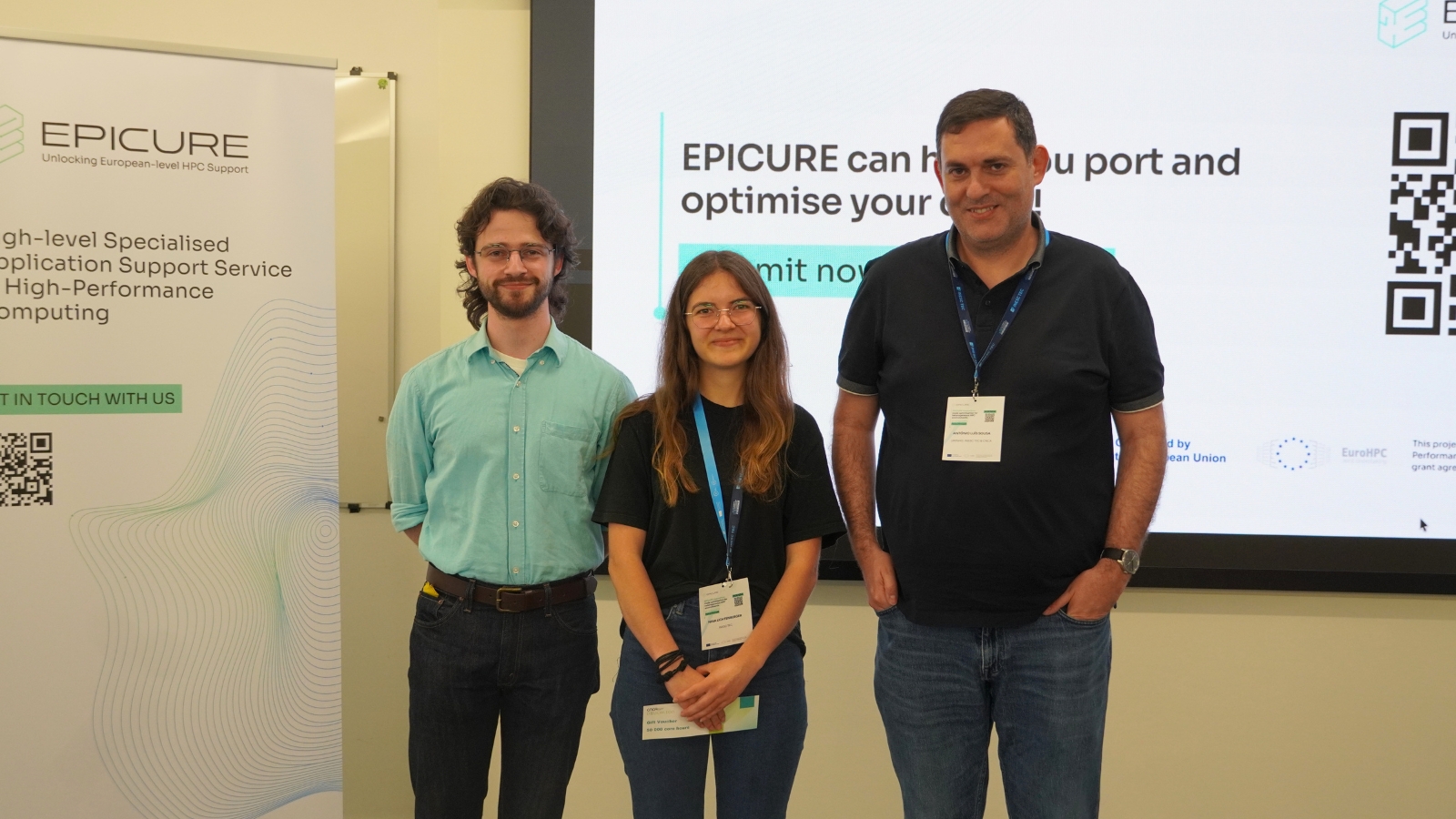
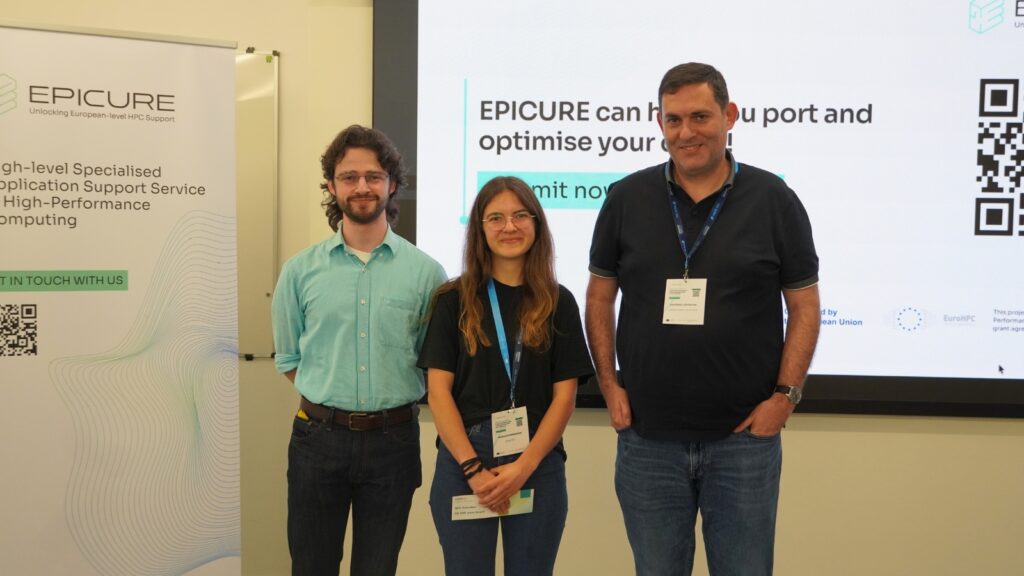
Our engine is TurboRVB, which I co-develop with Kosuke Nakano at NIMS in Japan. I requested my hours on the Leonardo Booster partition, and the application was granted. That was the start of our collaboration with Tommaso Gorni and Laura Bellentani, belonging to the EPICURE team at CINECA, the people who know the machine inside out.
Working with the machine experts
Kosuke took part in discussions with the EPICURE team in Japan, and hydrogen, the target material for our HANAMI project, became the test case. The EPICURE team at CINECA, who know Leonardo inside out, worked with us to optimise TurboRVB for it. Kosuke joined the discussions from Japan, bringing his knowledge of the code to complement theirs of the hardware, and hydrogen served as the test case, so every optimisation was tested on a problem we actually care about.
Two projects, one story
The two projects complement each other well. EPICURE helps with the last stretch: the fine-tuning of code for a specific HPC facility, while HANAMI promotes European-Japanese collaboration in code development. Together, they took TurboRVB from code developed between Paris and Tsukuba to one optimised for one of Europe’s flagship machines in Bologna.
What the faster code makes possible
The optimised code is already at work on cutting-edge problems. We plan to extend our previous work on machine learning potentials for hydrogen, generated by QMC (doi.org/10.1021/acs.jctc.5c00715), to hydride superconductors, such as H₃S and LaH10, building upon our recently published studies, where we examined the connection between their structural and electronic properties (doi.org/10.1103/b1dd-gzf3 and doi.org/10.48550/arXiv.2608.10428). At the same time, we are working to make our QMC codes portable to hybrid CPU-GPU architectures, the future of HPC (doi.org/10.1063/5.0296986 and doi.org/10.48550/arXiv.2607.13781).
A word to fellow researchers
If you are applying to a EuroHPC call, tick the EPICURE box! Making your code portable pays off in time and in efficient resource use, and the support team knows so well the machine that it can quickly find the optimal steps to improve the code performance.