



16/07/2026
Events
EPICURE Hackathon: Code optimisation for heterogeneous HPC environments
Start
2026/04/27
End
2026/04/29
Location
INESC TEC (Porto, Portugal) & Online
The Hackathon on Code Optimisation for Heterogeneous HPC Environments is a practical, collaborative event for developers, researchers, and HPC users aiming to improve application performance on modern heterogeneous systems.
Participants can join one of two tracks: the Custom Track, focused on optimising their own projects with mentor support, or the Guided Track, based on starter projects provided by the organisers. Mentors will be available in both tracks to offer advice and technical guidance.
Throughout the hackathon, participants will address real optimisation challenges, explore advanced techniques for CPUs, GPUs, and other accelerators, and share knowledge with members of the European HPC community.
The event will take place from April 27 to 29, 2026, in a hybrid format (online and on-site) at INESC TEC, Porto, Portugal.
Why join the hackathon?
-
- Hands-on HPC & Experience – Learn to train and deploy large language models, run molecular simulations, and explore quantum computing workflows using high-performance computing resources;
-
- Cutting-Edge Tools & Frameworks – Gain practical experience with state-of-the-art frameworks like LLaMA.cpp, vLLMs, AlphaFold3, VMD, Qiskit, GROMACS, NAMD and workflow managers such as Nextflow;
-
- Optimise & Scale Scientific Workflows – Learn performance profiling, parallel computing, and automation techniques to accelerate real-world scientific computations efficiently;
-
- Collaborative Innovation & Problem Solving – Work with peers on challenging projects, explore AI, HPC, and quantum integration, and receive guidance from expert mentors in a collaborative environment.
Registration
Registration is now closed.
Agenda
All times are in Lisbon time (UTC+1).
April 27, Monday
09:00 – 09:30 Registration
09:30 – 09:45 Welcome to the Hackathon | António Sousa (INESC TEC & UMinho & CNCA & Deucalion)
09:45 – 10:15 Getting Started with EPICURE: Projects and Support | Alícia Oliveira (INESC TEC & Deucalion)
10:15 – 11:00 Keynote and Q&A: From Data to Diagnosis: AI Powered by HPC | Andreia Gaudêncio (CNCA)
11:00 – 11:30 Coffee Break
11:30 – 12:30 Keynote and Q&A: Inside GH200: Architecture Fundamentals and Application Profiling for HPC | Ziyad AlBanoby (Barcelona Supercomputing Centre)
12:30 – 14:00 Lunch
14:00 – 15:30 Hands-on
-
-
- Custom Track: Work on your own projects with mentor support
- Guided Track: Work on the provided starter projects with guidance
-
15:30 – 16:00 Coffee Break
16:00 – 17:30 Hands-on
-
-
- Custom Track
- Guided Track
-
18:00 Welcome Reception
April 28, Tuesday
09:30 – 10:30 Keynote and Q&A: Optimising scientific code at the Deucalion ARM partition | Bernardo Malaca (CNCA & Deucalion User Support & University of Minho)
10:30 – 11:00 Project Status
11:00 – 11:30 Coffee Break and Group Photo
11:30 – 12:30 Keynote and Q&A: Quantum Computing Meets HPC: The Next Computational Frontier | André Sequeira (INESC TEC)
12:30 – 14:00 Lunch
14:00 – 15:30 Hands-on
-
-
- Custom Track
- Guided Track
-
15:30 – 16:00 Coffee Break
16:00 – 17:30 Hands-on
-
-
- Custom Track
- Guided Track
-
19:00 EPICURE Success Stories | João Barbosa (IT4Innovations) & Social Dinner
April 29, Wednesday
09:30-10:30 Keynote and Q&A: “Using GPUs for their intended purpose”: from interactive parallel visualization to digital twins in VR and AR” | Uwe Wössner (High Performance Computing Center Stuttgart)
10:30-11:00 Coffee Break
11:00-12:15 Hands-on
-
-
- Custom Track
- Guided Track
-
12:15-13:45 Lunch
13:45-15:30 Final Presentations and Achievements
15:30-16:00 Awards and Closing
Awards
Keynote Speakers and Mentors

Alícia Oliveira
Alicia Soares Oliveira holds a Master’s degree in Medical Informatics (2024) and a Bachelor’s degree in Biomedical Engineering (2022) from the University of Minho. She is currently pursuing a PhD in Informatics at the same university. Alicia works as a Machine Learning Engineer at INESC TEC, where she contributes to the EPICURE project, supporting the optimisation of scientific applications for European HPC systems.
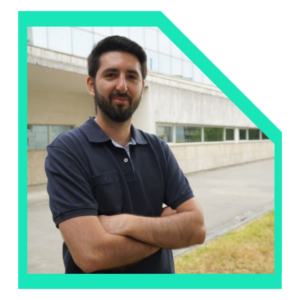
André Sequeira
André Sequeira is a researcher in Quantum Computing at INESC TEC and an Assistant Professor at the University of Minho. He holds a PhD in Computer Science specializing in Quantum Information and Computation. His work focuses on the intersection of Artificial Intelligence and Quantum Computing, particularly Quantum Machine Learning. He has contributed to the integration of quantum computing simulators into the Deucalion EuroHPC supercomputer and has authored and presented more than ten research articles at leading international conferences. Since 2022, he has also taught undergraduate and MSc-level courses in Quantum Computing and Quantum Machine Learning, while co-supervising master’s students and visiting researchers. He is also a founding member of ERCIM’s Working Group on Quantum Technologies.

Andreia Gaudêncio
Andreia Gaudêncio holds a PhD in Biomedical Engineering. Her doctoral work focused on multiscale and multidimensional entropy measures for characterising texture in biomedical data, with applications in pulmonary pathology imaging. During her research, she processed and analysed biomedical datasets with the Navigator supercomputer at the Laboratory for Advanced Computing (LCA), University of Coimbra. Currently a Data Services Specialist at CNCA (Centro Nacional de Computação Avançada), she operates at the intersection of HPC and AI in healthcare, providing technical support for companies and researchers enrolled in the BSC AI Factory project that are using Deucalion’s and Mare Nostrum’s supercomputers. She also has supervised and co-supervised bachelor’s and master’s students in data-driven research initiatives.

António Sousa
António Sousa is an Associate Professor at the Department of Informatics of the University of Minho and a Senior Researcher at the High-Assurance Software Laboratory (HASLab) at INESC TEC, where he serves as Co-coordinator. His research interests focus on dependable distributed systems, with particular application to distributed database systems, large-scale distributed systems, cloud computing management, and high-performance computing — notably on topics related to the management and efficiency of HPC systems. He serves as Director of Operations of the EuroHPC Deucalion supercomputer, hosted by the National Center for Advanced Computing, and Portugal’s national HPC flagship infrastructure, playing a central role in its operation and strategic development. He has been involved in several European HPC projects, RISC2, EUROCC1 and 2 and currently in EPICURE and HANAMI.
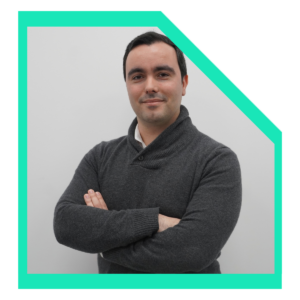
Bernardo Malaca
Bernardo Malaca holds a PhD in Physics Engineering and has over four years of experience in high-performance computing (HPC) user support. For the past 1.5 years, he have been working on the Deucalion supercomputer, supporting users and workflows on a peta-scale HPC system. He also offers technical support at the BSC AI Factory, where Portuguese small and medium-scale companies ask for resources and guidance for AI adoption.

Bert Jorissen
Bert Jorissen has a background in physics with a strong focus on electronic structure calculations, including density functional theory (DFT). He is currently working at EPICURE, where he mainly supports users in optimising and running their applications on the LUMI supercomputer. Bert also contributes to scientific software development, with expertise in both Python and C++.

Francisco Vide
Francisco Vide graduated with an integrated master’s degree in Mechanical Engineering at the Faculty of Engineering of the University of Porto. He has been working in Computational Fluid Dynamics since his master’s studies, later continuing in this field during a research master’s at the von Kármán Institute for Fluid Dynamics and through his PhD in Mechanical Engineering at FEUP. He is currently a member of the support team for the Deucalion supercomputer.

Isabel Rio-Torto
Isabel Rio-Torto obtained her Master’s degree in Electrical and Computer Engineering from the Faculty of Engineering of the University of Porto in 2019. She is currently awaiting the defence of her PhD in Computer Science at the Faculty of Sciences of the University of Porto, with a thesis titled “Weakly Supervised Multimodal Explanations for Medical Image Classification.”
Alongside her role as a researcher at INESC TEC, she is an Invited Teaching Assistant at FEUP and FCUP, teaching C programming, Computer Vision, and Artificial Intelligence. Isabel has extensive experience using HPC systems, particularly for GPU-based AI training and inference in PyTorch, including work with Large (Vision) Language Models.

João Barbosa
João Barbosa is the Technical Lead for EPICURE and heads the High-Level Support Team at IT4Innovations. With deep expertise in modern HPC architectures, from GPU-accelerated and heterogeneous systems to emerging computing platforms, he specialises in hands-on user support, code optimisation, and parallel computing, working directly with researchers to overcome performance bottlenecks and scale their applications on Europe’s most powerful supercomputers. Previously, at the Texas Advanced Computing Centre and the University of Minho, he established a strong track record in scalable computing and application support. An active contributor to scientific communities and open-source projects, João is driven by a single goal: making advanced HPC truly work for the people who need it most.

Laura Bellentani
Originally trained as a physicist, Laura Bellentani specialised in High-Performance Computing during her PhD in Physics and Nanosciences at the University of Modena and Reggio Emilia. Since 2021, she has been a member of the High-Level Support Team at CINECA, where her work focuses on porting applications to GPUs. She maintains a focus on balancing performance with code maintainability and portability, viewing profiling as an indispensable tool for achieving effective and sustainable optimisations.

Miguel Dias Costa
Miguel Dias Costa has a background in Computational Physics and over two decades of experience managing university-level HPC systems. He also has supported researchers on both university-level and national-level systems across Europe and Asia. Miguel is currently the Technical Director of University of Coimbra’s Laboratory for Advanced Computing and consultant for the Deucalion/CNCA user support team.

Miguel Peixoto
Miguel Peixoto leads the systems administration team of the Deucalion supercomputer and has been involved in the project since its pre-production phase. He has extensive experience in the implementation, operation and optimisation of large-scale HPC clusters.
At INESC TEC, he manages and supports HPC clusters used by scientific teams across multiple scientific domains, ensuring the availability, performance and efficiency of computational resources. His work combines systems administration, advanced user support and close collaboration with researchers to maximise the effective use of high-performance computing environments.

Nuno Reis
Nuno Reis holds a Bachelor’s degree in Physics Engineering and a Master’s degree in Physics of Information from Universidade do Minho. His expertise sits at the intersection of high-performance computing, physics, and information technology. He is currently based at IT4Innovations in the Czech Republic, where he works as an Innovation Technology Developer within the high-level support team, contributing to the EPICURE project and optimising scientific applications on HPC systems.

Rui Silva
Rui Silva holds a PhD in Computer Science, specialising in HPC. During his doctoral research, he focused on data access optimisation and developed extensive expertise in CPU memory hierarchy. He is currently a member of the Deucalion support team, where his responsibilities include technical assistance to users.
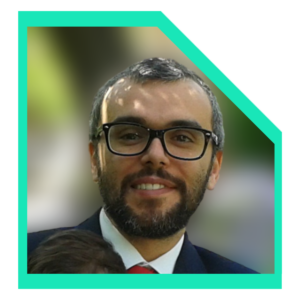
Sergio Orlandini
Sergio Orlandini has a master’s degree and a PhD in Theoretical and Computational Physical Chemistry. He has a wide experience in scientific software development on hybrid architectures, CPU-GPU, deep learning workloads on HPC systems, GPU programming, optimisation, and parallelisation of scientific and technical applications and evaluation of emerging architecture prototypes. He has many years of experience and collaboration with both the academic community and the industry. He is a member of the Scientific Advisory Board for the NVAITC programme. He is also involved in many courses at CINECA on GPU programming, AI & ML, optimisation, and parallelisation of HPC applications.

Uwe Wössner
Uwe Wössner has headed the Visualisation Department at the High Performance Computing Center Stuttgart (HLRS) since 2004. He holds a PhD in Mechanical Engineering from the University of Stuttgart (2009) and is a guest professor and lecturer at TU Vienna (Austria) and HSR Rapperswil (Switzerland). He is also the co-founder of VirCinity GmbH and has received international distinctions, including the HPC Challenge (2003) and the HPC Bandwidth Challenge (2006). His research focuses on collaborative virtual environments for scientific visualisation, 3D user interfaces, interaction techniques for computational steering, and the use of VR and AR in BIM. He also serves on the programme committees of several conferences related to VR and 3D user interfaces, including IEEE VR, IEEE VIS and EuroVR.
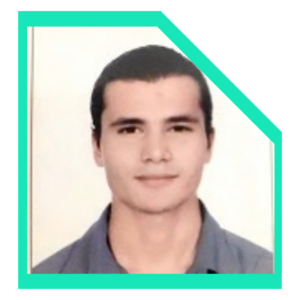
Ziyad AlBanoby
Ziyad AlBanoby studied at Alexandria University in Alexandria, Egypt, earning his degree in Computer and Communications Engineering. He specializes in CUDA software optimization and porting, focusing on algorithms on GPU. He worked for two years at Brightskies Inc. and, in 2024, joined the High-Level Support Team at the Barcelona Supercomputing Center.